Thursday, 19 October 2017

Report

 Review and Discussion of texture mapping in the context of 3D Modelling


Abstract


150 to 200 words


Table of contents

define texture mapping


Texture mappings relationship with 3-D modelers


Textures improvements


Downside and upsides of having complicated textures 

Importance on the use of techniques for time management

Time management without quality sacrifice

Introduction


Main body

What is texture mapping? and how does it fit with 3-D modelling?

Texture mapping is using a 2-D image and applying it to a 3-D Model which is almost always used after crating 3-D models the 2-D image covers the 3-D objects surface giving it a distinct finish. Which in turn breathes some life into the model that otherwise would look completely lifeless  it also gives the model depth making it seem more realistic depending on the texture in use. applying the texture on the Model will also have to require some effort as you would would have to accurately unwrap the model. UV Unwrapping a texture is the process of flattening a 2-D image and then proceeding to start drawing lines along the edges of polygons on a 3-D object in order to detail which part of the model gets a certain parts of the texture that is applied to it. This is extremely helpful when you want to make a very detailed model. 

Texture mappings relationship with 3-D modelers has gotten to the point in which it is almost expected for 3-D modelers to take into consideration since it frees up more time for the modeler to create more models for an elaborate scene for a client if requested. Because Textures make it so that the base model does not have to be as complicated  when you can just apply an image of a real world example or even create your own image. Although it is often expected for 3-D modeller to be able to texture objects. If there is enough modellers the texturing is divided up to be more efficient with time.   

 In regards to Textures themselves  you are able to create a more realistic effect by using  bump maps, normal maps and displacement maps. Which improve certain aspects of  the textures that they are applied to. Bump maps give the texture a rough surface feel  by adding an illusion of depth to the models polygons. For example if used on a brick texture it would portray the surface of a real brick more accurately, with use of grey scale values.
Normal maps are similar to bump maps as they also give the illusion that textures applied to the model have more depth to them. But normal maps do it with RGB information.
Displacement maps are visually the same as bump maps although the details behind them are marginally different bump maps create a simple illusion where displacements create a complex illusion. These maps do not alter the model by creating more polygons since their purpose is to avoid complicating the structure 3-D models.

The downsides of texture mapping is often when using higher quality images for your models it can have an adverse effect on render times which is sometimes unavoidable. which is why 3-d modellers and textures try and work together to make a low poly object have the desired appearance with the right amount of detail. So that when a Texture is applied it does not require extensive render times once finished. If there is enough time however then a highly detailed base model with a high amount of detail in a texture can be accomplished but this very much not recommend since the majority of 3D modelling with texture techniques is about  having high quality looking objects without sacrificing time.

Techniques for reducing render time are generally desired for almost every part of the a 3d modellers job. because the process itself is lengthy and  you will be looking to reduce the time spent on the finishing touches since all kinds of texturing and modelling can take its toll on your system since it is not guaranteed that your employer will have a high end Computer making render times a non issue. Since some renders can take days if  the textures and models are handle without any care or thought into how long the renders will take. most company employ render farms since for projects that require lengthy animations it is best to reduce. Time spent on finish up a project whenever possible.

Time Management is perhaps one the most important aspects of any project since if you spend too much time on a certain part of a job then the other parts of a projects jobs will suffer such as if the reason is a 3d modeller taking too long to finish Creating the desired amount of models because not having them ready so that textures can applied makes it so much more difficult further down the line when it comes time for the editors to begin the finishing touches with the completely finished project you do not want them to have almost no time left before a deadline. The same can also be applied to Texture creators since you do not want them taking too long either.  


1800 words


Analysis


Conclusion


Reference List

http://whatis.techtarget.com/definition/texture-mapping
http://www.cs.columbia.edu/~allen/PHOTOPAPERS/texmaptutorial.pdf
https://www.inf.ed.ac.uk/publications/thesis/online/IP030017.pdf
https://www.pluralsight.com/blog/film-games/bump-normal-and-displacement-maps


Appendix

Thursday, 12 October 2017

IP rights and their importance in the creative industries

IP rights and their importance in the creative industries


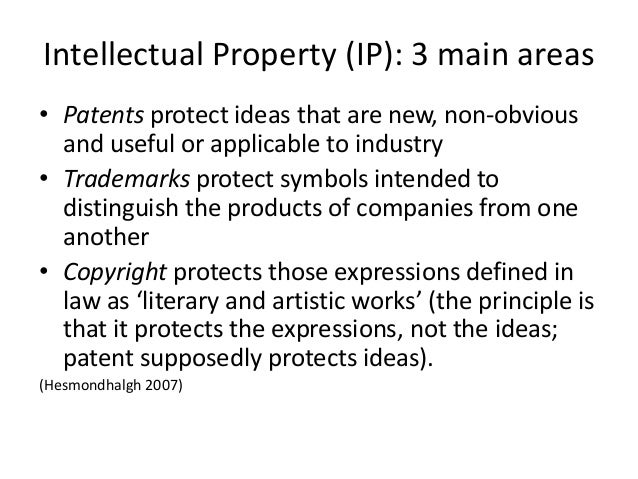
Intellectual property is how people within the creative industries show how they differentiate between each others work. IP is important in 3D animation and modelling because if you misuse another animators IP then they have legal right to take action against you. it is also just insulting to try and pass another work off as your own. As a 3D animator/modeler i can say that i have a particle attachment to my work and it would just be upsetting to find someone stealing your work.

I personally don't feel that IP rights stifle creativity because when you feel like your in a bit of rut, there isn't anything wrong with using another persons work as a point of reference or inspiration as long as it is properly credited. With this in mind for me it is kind of encouraging as it forces you think more about alternative ways of modelling and animating. This kind of encouragement is great since it well push you to wither try and improve existing work or create something. 


IP rights is extremely important within 3D animation because you must know what is your and what isn't. Applying for a job with a 3D company or games studio is where IP mostly comes into play you have to make sure your work is properly marked as yours or what is to stop said company/studio from taking your work as there own but that is worst outcome, the best outcome would be that the company really likes your work but you have make sure you can prove that you made it or how do they know you can really do it. Any job opportunity can be ruined if you don't have your work properly marked as yours.         


Friday, 6 October 2017

Freelancing the road to success and how important is networking?

 Freelancing the road to success and how important is networking?


Freelancing as an animator is extremely important as in can improve your skills within the field and build a good reputation and are decent at the work so that other clients may contact you for a job. It is also important to make sure you don't develop a bad reputation like say passing off someone else work as your own since this can get you blacklisted making no one want to hire you. With this in mind you should also make sure that you are able and willing to following the wishes of the client and make sure not to stray from the brief they give you.
As A freelancer you will need to be very involved with networking  to survive since a animator freelancer. For example will only get jobs if they make it a point to look for them. Which is why using Professional community websites such as linked-in  will very useful when you need to contact people and even if they don't hire you you have at least let them know you exist for the future. you can also try talking to people you know since they may be able to put you in contact with someone who may be looking.


So as long as you are good at your field, are known for having a good reputation for completing your assigned work within the confines of the brief provided by your client and are good with networking and getting in contact with various clients then you should do decently as a freelancer. While being particular good at a certain software will certainly help in the animation field it is always best to become knowledgeable with other software so that you can adapt in case your client has asked for it to be produced with in a a certain software.     

Tuesday, 26 September 2017

Does the concept of Professionalism apply to the creative industries?

Does the concept of Professionalism apply to the creative industries?


What professionalism means within 3D Animation to me is when hired to create pieces of work you try your best to complete it on time. You should also be expected to behave and perform well within a team, mange you time appropriately and adhere to your responsibility within a contract. It also means not passing other peoples work off as your own. making sure you enjoy the work is a big part of working in 3D but you should also make sure keep the main point in the task in mind.


 In the creative industries professionalism involving dress code can be tricky since the industries is pretty wide. But for example in areas such as gaming and animation studios having a look at the various positions within the studios you can tell that positions such as animators, testers, coders and editors have a more casual dress code. But there is such a thing as to casual since some casual shirts can have rude material on them which wont be ideal for the work place. As for higher up positions such as management seem to have a range from smart causal to smartly dressed like suits. Which is where the differences become more apparent when it comes to  developers and publishers .


When it comes to developers they do have to run some things by there publishers if they have one to  make sure they are okay with  what ever is in the product since they are the ones who are publishing it. Since the publisher is funding it they sometimes would like the product they are funding to have other things within the product. Which can bring in more money or what they think is more appealing and will be received well with consumers. These rules can also be applied to animation studios when thinking of the brief provided by the client.


Thursday, 21 September 2017

What makes a good Portfolio Or Show reel 3D Computer Animation?

What makes a good Portfolio Or Show reel 3D Computer Animation?


In my opinion what makes a good portfolio for 3D Computer animation would be examples of your work such as here is an example of some 3D work from college created by Martin Quinn.


For the night time scene i wanted the fog to look really thick. 

For the daytime scene i wanted it to look like morning or evening so made the fog appear less dense.

These were stills that I had rendered out for creating a Victorian street there is also video footage of just a basic fly through of my work. The objective was to create a foggy night time street gas lamp lights. as well as foggy daytime street with a smokey chimney.      


http://iradesign.info/lamp/gas-lamp-post.html
These are the images i used for reference for the house and street lamp template.

 sketches of your creative process.


 Martin Quinn


Here are some sketches of the layouts and plans i had for the Victorian street.
The sketches are meant to show some of the detail such as street light positions the sketches for how the house template was supposed to look and how it was updated as the development went along.

with some information at the beginning or end to identify the creator. It should also be able to give its readers some insight into how the creator of the portfolios mind works giving possible employers an idea of what they might expect and what work ethnic if they hired them to work on a project.